DailyGift: Earn Reward
- 4.5
- Rating
- 1.00M
- Installs
- Free
- Price

 Analysis by App-foxy
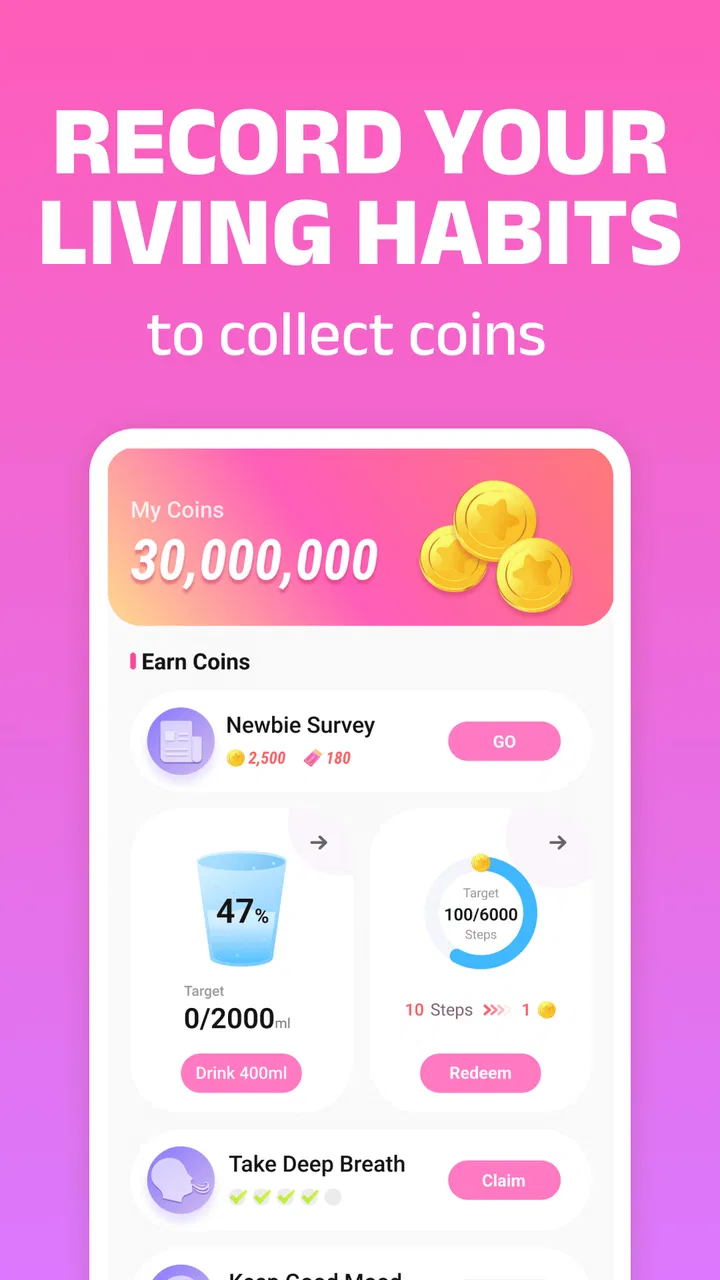
I tried DailyGift: Earn Reward as a small lifestyle tool for turning everyday habits into something more visible and motivating. The idea is easy to understand: you record habits, keep returning to them, and receive rewards along the way. That sounds simple, but the usefulness depends on whether the reward layer actually helps you maintain a routine rather than becoming another task to manage.
My first impression is that DailyGift is aimed at people who need a gentle push to stay consistent. It is not presented as a serious medical tracker or a deep personal analytics platform. Instead, it sits closer to a habit journal with an incentive attached. That makes it approachable for routines such as reading, drinking water, stretching, tidying a room, studying, or putting the phone away before bed.
The app is free, belongs to the lifestyle category, and is made by DailyGift Team. It has reached more than a million installs, with an average rating of 4.5 from roughly 129 thousand ratings. Those figures suggest that the basic concept connects with a substantial audience, although popularity alone does not tell you whether its reward system will suit your personality.
You May Also Like

 Blood Strike: 2.5 Anniversary
Blood Strike’s Loadouts Turn Every Drop Into a Tactical Gamble
A close look at Blood Strike’s custom loadouts: how fast access to signature weapons reshapes its battle royale rhythm, rewards preparation, and narrows the gap between fights.

 Pandora - Music & Podcasts
Pandora’s Music Is Easy to Start, but Harder to Recover
Pandora’s strength is its low-effort path from a seed to a station. Its weak spot is how much confidence it asks you to place in connection, setup, and quiet recovery.

 8 Ball Pool
 Is Built on Rivalries, Rematches, and Routine
A close look at the rivalries, rematches, shared routines, and unanswered safety questions that turn a quick pool match into a persistent mobile community.

 Samsung Music
’s Quiet Strength Is Playing What You Already Own
Its reach comes less from spectacle than from dependable access to a personal library. That simplicity is both the app’s strongest retention engine and its ceiling.

 AccuWeather: Weather Radar
AccuWeather Review: A Quick, Clear Forecast for Everyday Decisions
For everyday plans, the best forecast is the one you can understand quickly. AccuWeather makes rain timing, radar, and local conditions easy to act on, with a few trade-offs.

 Hill Climb Racing
Why Hill Climb Racing Still Turns Crashes Into One More Run
A tiny car, a bumpy hill and one more upgrade: Hill Climb Racing keeps resurfacing because its simple chaos makes every near-miss feel personal.
More From Our News Desk



How DailyGift feels in everyday use
The most useful way to approach DailyGift is to treat it as a short daily check-in, not as a complete life-management system. I would open it when I had finished a chosen activity, mark the habit, and use the reward as a small acknowledgment of progress. That workflow is deliberately lighter than writing a long journal entry or maintaining a detailed spreadsheet.
For example, imagine someone trying to build a reading routine. Rather than setting an ambitious target and abandoning it after a few days, I would create a modest habit that can realistically be completed on a busy evening. After reading, I would record the result immediately. The important part is not the size of the reward; it is the connection between the action and the moment of recognition.
This approach also works for habits that are easy to forget because they do not produce an obvious result. Cleaning a desk, preparing clothes for the next morning, practicing a language, or taking a short walk can feel insignificant when viewed separately. A reward-based record gives those actions a visible place in the day.
The strongest use of DailyGift is as a consistency aid, not as a replacement for discipline. It can make a routine more satisfying, but it cannot decide what matters to you or remove the effort involved. If you choose too many habits at once, the app can become a list of unfinished intentions instead of a helpful prompt.
Choosing habits without creating extra pressure
I found that the quality of the setup matters more than the number of habits. Starting with one or two behaviors makes the reward loop easier to understand and gives you a clearer sense of whether the app is helping. Adding every personal goal at once may feel productive, but it often creates unnecessary guilt when normal life interrupts the plan.
A practical method is to separate habits into two groups. The first contains actions that are nearly automatic, such as taking a regular break or preparing something the night before. The second contains habits that require real effort, such as exercise, study, or creative work. Recording both can be useful, but the second group should remain small enough to fit your actual schedule.
There is also a subtle trade-off in reward-based tracking. Rewards can make a routine more appealing at the beginning, yet they may lose their effect if you expect a noticeable payoff for every small action. I would use the reward as a nudge while allowing the habit itself to become the longer-term benefit. That keeps the system from feeling transactional.
A realistic routine for a busy day
Consider a person who works or studies during the day and has limited attention in the evening. A sensible DailyGift routine could involve one morning habit, one daytime habit, and one evening habit. The morning item might be preparing for the day, the daytime item could be a short learning session, and the evening item might be putting devices aside before sleep.
In that situation, the app is most useful when the check-in takes only a moment. The user does not need to turn the process into a ceremony. Completing the habit, recording it while the action is still fresh, and moving on keeps the reward loop connected to real life. If the app requires too much thought every time, the tracking itself can become the habit that gets abandoned.
I would also avoid using it to judge personal worth. Missing a day does not erase previous progress. A healthier workflow is to review what made the habit difficult, reduce the target if necessary, and continue. DailyGift can support that reset because its central idea is returning to the routine, not achieving perfection.
What the current version suggests about the product
The current version is 3.11.03, while the app was released on August 2, 2023. That places DailyGift beyond its initial launch phase and indicates an app that has had time to settle into its basic identity. I see it as a focused product rather than one trying to become an all-purpose planner.
For existing users, a version number at this stage is encouraging because it suggests ongoing refinement rather than a one-off experiment. At the same time, a version label by itself does not prove that every part of the experience has changed dramatically. I would judge the app by how reliably it lets me record habits and understand rewards, not by the number attached to the release.
The minimum operating-system requirement is Android 9, which makes it accessible to many people using older Android devices. That is useful if you want a lightweight habit tool without replacing a phone simply to run it. The content rating is Teen, so families should still consider whether the reward approach is appropriate for the younger person using it.
The current evidence points to a product whose main promise remains straightforward: habit recording with rewards. I would not install it expecting a full coaching program, detailed health interpretation, or the depth of a specialist fitness platform. Its value comes from keeping the action simple enough to repeat.
How it compares with ordinary alternatives
The most obvious alternative is a notes app. Notes are flexible and can hold reflections, checklists, and longer explanations, but they usually do not create the same focused sense of completion. DailyGift has an advantage when the main question is simply, “Did I do this today?” A notes app is better when you want to explain why the habit succeeded or failed.
Calendar reminders are another common substitute. They are excellent for telling you when something should happen, but they are not always satisfying for recording a repeated personal behavior. DailyGift is more appropriate when you want the act of completion to accumulate into a reward-oriented routine. A calendar remains better for appointments, deadlines, and events that happen at fixed times.
Dedicated habit trackers may offer more detailed streaks, charts, categories, or customization. If you enjoy analyzing patterns across several routines, a specialized tracker could be the stronger choice. DailyGift is more appealing to someone who would rather have a clear, encouraging loop than a dashboard full of measurements.
Paper habit charts still have one advantage: they are visible without opening a phone. For people who are trying to reduce screen time, a notebook may be more suitable. DailyGift makes more sense when the phone is already part of the daily routine and the reward mechanism gives you a reason to check in.
Small techniques that make the reward loop work better
One useful technique is to record habits at the moment of completion instead of waiting until the end of the day. Delayed recording invites forgotten details and makes the reward feel disconnected from the action. A quick check-in immediately after finishing preserves the sense that the app is acknowledging something you actually did.
Another is to pair a difficult habit with an existing routine. For instance, a short study session can follow a regular meal, or a tidy-up can happen before a familiar evening activity. DailyGift does not need to control the entire schedule; it can serve as the visible marker attached to a cue that already exists.
A third technique is to use the reward as feedback when adjusting difficulty. If a habit is completed effortlessly for several days, it may be ready for a modest increase. If it is repeatedly missed, the problem may be the target rather than your motivation. I would reduce the action until it is realistic, then build again. This is more useful than treating every missed entry as a personal failure.
I also recommend keeping reward expectations clear in your own mind. The app’s appeal is not necessarily a dramatic prize; the reward can simply make progress feel tangible. If you install it expecting a substitute for income or a guaranteed material benefit, you are likely to be disappointed. It works best as a motivational layer around self-chosen habits.
Where the experience may fall short
The simplicity that makes DailyGift approachable can also limit it. People who want extensive statistics, detailed historical comparisons, or a broad planning system may find the experience too narrow. A habit record answers whether you completed something, but many users eventually want to know what time, context, or workload affected their performance.
There is also a risk of reward fatigue. Any incentive system can become less interesting once the novelty fades. If your motivation depends entirely on receiving something each time, the routine may weaken when the reward no longer feels fresh. I would therefore combine DailyGift with a personal reason for the habit, such as better energy, improved focus, or a calmer home.
Another limitation is psychological rather than technical. Recording a habit can feel like accountability, but it can also become a source of pressure for people who already track themselves too closely. If missed entries make you anxious, a simple paper note or a flexible reminder may be healthier. The right tool should reduce friction, not add another standard you feel forced to meet.
Users who need professional guidance should also keep expectations realistic. A lifestyle app can help organize personal goals, but it is not a substitute for medical advice, therapy, or a tailored training plan. For sensitive health-related changes, I would use DailyGift only as a personal record alongside appropriate guidance.
Questions to consider before installing
If you are wondering whether it is genuinely free to start, the listed price is free. That makes it easy to test without committing money. I would still approach the reward concept with the right expectation: the app is designed to make habit completion more motivating, not to turn ordinary actions into a dependable source of financial return.
If you are using an older Android phone, the key compatibility point is Android 9 or newer. That covers a broad range of devices, but anyone running an earlier system should check compatibility before planning a routine around it. On a supported device, the app’s appeal is its low barrier to entry rather than demanding hardware.
People also often ask whether it is suitable for teenagers. The Teen content rating means it is not positioned as an unrestricted children’s product. A teenager may find the reward structure engaging for study, organization, or personal routines, but parents should discuss realistic goals and avoid turning every household expectation into a tracked score.
Another practical question is whether it can replace a calendar or task manager. In my view, it should not. Use a calendar for events and deadlines, a task manager for one-time obligations, and DailyGift for repeated behaviors that benefit from a sense of continuity. The tools can coexist, but asking one app to handle all three jobs usually creates clutter.
Finally, I would ask whether you enjoy incentive-based motivation. Some people respond well to visible progress and small rewards; others prefer quiet routines with no external layer. If you feel energized by checking off a behavior and seeing it recognized, DailyGift is worth trying. If you dislike gamified or reward-oriented systems, its central idea may feel unnecessary rather than helpful.
What I would watch as the app continues to evolve
For future use, I would pay attention to whether DailyGift keeps the recording process quick as the product develops. More options can be useful, but every extra step between completing a habit and marking it can weaken the core loop. The best evolution would preserve the app’s accessibility while giving experienced users more control when they need it.
I would also watch how clearly the app communicates the relationship between habits and rewards. Users should understand what they have completed and what the reward represents without having to interpret a confusing system. Clear feedback matters especially for people who are installing a habit tracker for the first time.
Another important area is balance. A mature version should continue serving casual users who want a simple daily prompt while avoiding pressure to track every part of life. The product will be stronger if it supports flexible routines instead of encouraging people to measure themselves constantly.
After using it, my recommendation is fairly specific. DailyGift is a good fit for someone who wants a free, approachable way to connect repeated habits with small rewards. It is especially suitable for beginners, students, and busy people who need a quick reminder to return to a routine. I would skip it in favor of a more detailed tracker if charts, deep customization, or extensive planning are your priorities.
The app does not make habits effortless, and it should not be judged as though it does. Its real contribution is smaller and more practical: it gives ordinary actions a place to be recorded and a reason to feel noticed. With a modest setup, realistic targets, and sensible expectations, DailyGift can become a useful companion for building consistency without turning your entire day into a performance report.
FAQs for DailyGift: Earn Reward
01What is DailyGift: Earn Reward and how does it work?
DailyGift: Earn Reward is a mobile application designed to help users earn rewards by completing simple tasks. These tasks can range from watching videos, completing surveys, or playing games. Users accumulate points which can then be redeemed for various rewards such as gift cards or discounts. The app is user-friendly and offers a straightforward way to earn extra perks in your free time.
02Is DailyGift: Earn Reward free to download and use?
Yes, DailyGift: Earn Reward is free to download from both the App Store and Google Play. The app offers in-app purchases and optional ads, but users can enjoy the core functionalities without spending any money. It's designed to be accessible for everyone, providing a way to earn rewards without upfront costs.
03Are there any restrictions on who can use DailyGift: Earn Reward?
DailyGift: Earn Reward is available to users worldwide, but there may be age restrictions due to the nature of some tasks or surveys. Typically, users need to be at least 13 years old, and parental consent might be required for younger users. It's advisable to check the app's terms and conditions for specific details regarding age and regional restrictions.
04How are rewards redeemed on DailyGift: Earn Reward, and are they reliable?
Rewards on DailyGift: Earn Reward are redeemed using the points accumulated by completing tasks. Users can choose from a variety of rewards, including gift cards to popular retailers and online platforms. The app has received positive feedback regarding the reliability of its rewards system, ensuring users receive their chosen rewards promptly after redemption.
05Is personal information safe with DailyGift: Earn Reward?
DailyGift: Earn Reward takes user privacy seriously, employing industry-standard security measures to protect personal information. While the app may require some data to personalize the experience or for completing surveys, it adheres to privacy policies and guidelines to ensure user data is handled responsibly. Users can review the app's privacy policy for more detailed information.
Pros
- Easy-to-use interface for quick navigation.
- Frequent updates with new reward options.
- Supports multiple payout methods.
- Low minimum withdrawal threshold.
- Engaging daily tasks keep users active.
Cons
- Limited availability in some regions.
- Requires stable internet connection.
- Ads can be intrusive at times.
- Occasional bugs in reward redemption.
- Earning potential might be slow.

DailyGift: Earn Reward
Gallery